Category: All Categories

Over the past three years, Clinical Accelerator has been honored to collaborate with Polares Medical, a pioneering company in the field of mitral valve therapies. Our partnership has focused on advancing early-stage clinical investigations of Polares’s innovative PLAR (Posterior Leaflet Augmentation and Replacement) system, and supporting the generation of quality clinical evidence regarding its safety and efficacy.


The Evolving Landscape of Mitral Valve Innovation

Mitral regurgitation (MR) remains one of the most prevalent and challenging forms of heart valve disease. While surgical mitral valve repair and transcatheter edge-to-edge repair (TEER) offer solutions for many patients, a significant proportion remain untreated due to anatomical complexity, comorbidities, or procedural risk.

In response to this unmet need, the field of mitral valve intervention is witnessing a surge in innovation. Among the emerging technologies, Polares Medical’s PLAR system has carved out a promising position.

Unlike conventional valve replacement strategies, the PLAR system provides a transcatheter therapy that selectively replaces the posterior leaflet of the mitral valve, while preserving the native anterior leaflet. This novel approach is designed to restore normal valve function with a less invasive procedure, potentially reducing procedural risk, simplifying future interventions, and offering a more physiologic solution.


Polares Medical: A Promising Contender in Mitral Valve Therapies

Headquartered in Lausanne, Switzerland, Polares Medical has drawn considerable attention within the cardiovascular innovation community. The PLAR system has shown promising outcomes in early clinical evaluations, including data from compassionate-use cases in Europe.

With substantial funding secured to advance clinical studies, and a clear focus on patients with complex mitral valve disease who are underserved by existing therapies, Polares is well-positioned to become a key player in the evolving structural heart landscape.


A Productive Partnership in Georgia

As part of this global effort, Clinical Accelerator has played a important role in managing early feasibility studies in Georgia, providing operational, regulatory, and logistical support. These early-stage trials have been critical in validating the clinical potential of the PLAR system and laying the foundation for future pivotal studies.

Georgia’s growing reputation as a hub for cardiovascular research and innovation has made it an ideal environment for conducting high-quality early-stage investigations. We are proud to contribute to both the local clinical research landscape and Polares’s global mission.


Looking Ahead

As we reflect on three years of productive collaboration, Clinical Accelerator remains deeply committed to supporting Polares Medical in its mission to revolutionize mitral valve therapy. Together, we aim to bring innovative, less invasive treatment options to patients with mitral regurgitation—enhancing clinical outcomes and improving lives.

We are pleased to announce our collaboration with Proton Intelligence, a company dedicated to transforming management of potassium to prevent hyperkalemia and hypokalemia for people living with chronic kidney disease (CKD) and congestive heart failure (CHF) through innovative technology.

Hyperkalemia, characterized by elevated potassium levels, affects more than 3.7 million people in the US alone. It is common in patients with CKD and CHF and can lead to life-threatening cardiac events. Proton Intelligence is developing the world’s first real-time, on-demand potassium monitoring wearable — aiming to equip clinicians with the tools to manage potassium safely and precisely in some of the most complex and vulnerable patient populations.

Our collaboration focuses on an early human feasibility study in dialysis patients, conducted under the leadership of Dr. Marat Fudim, MD, MHS, Advanced Heart Failure Specialist and Cardiologist at Duke University.

At Clinical Accelerator, we are committed to supporting groundbreaking medical innovations through partnerships with emerging medtech companies. Our collaboration with Proton Intelligence exemplifies our dedication to advancing innovative medical technologies through effective implementation of early human feasibility studies. We look forward to the advancements this partnership will bring to hyperkalemia management and patient care.

Clinical Accelerator, a clinical trial management organization specializing in the cardiovascular field, is pleased to announce its collaboration with Nyra Medical on the clinical evaluation of the CArdiac Leaflet ENhancer (CARLEN) System, a novel transcatheter heart valve repair technology designed to address functional mitral valve regurgitation. The study is set to take place at THVC (Tbilisi Heart and Vascular Centre) and Healthycore (Israeli-Georgian Medical Center) in Tbilisi, Georgia, two renowned centers for clinical trials with innovative cardiac devices.

The CARLEN System, developed by Nyra Medical, offers a transcatheter solution for patients suffering from functional mitral regurgitation. Using a transcatheter femoral venous approach, the CARLEN System is designed to restore normal mitral valve function by augmenting the native valve’s leaflet with an implant, restoring coaptation and correcting regurgitation. As it preserves the native valve geometry, CARLEN is designed to be the first forward compatible device that allows future interventions.

Functional mitral regurgitation (FMR), often caused by ventricular or atrial dysfunction, presents a significant challenge as it increases mortality, heart failure hospitalizations and reduces patients quality of life. There is a significant unment clinical need for therapies that would effectively treat the valve lesion, without too many anatomical exclusion criteria or sacrificing the native valve geometry. The CARLEN System addresses this gap and is designed to improve outcomes and expand transcatheter FMR therapies to a broader patient population.

“This collaboration with Nyra Medical brings an exciting new solution to the forefront of mitral valve repair,” said Dr. Nik Nikitin, Managing Director at Clinical Accelerator. “The CARLEN System’s innovative approach to valve enhancement has the potential to address a long-standing unmet need in cardiology by providing an alternative to high-risk surgical procedures. We are confident that the study at THVC and Healthycore will help validate this technology and obtain valuable early clinical data which will accelerate its further development

Unlike existing transcatheter devices which rely on approximating valve leaflets to reduce regurgitation, the CARLEN System focuses on enhancing leaflet dimensions to restore the valve’s natural function. This approach minimizes the risk of complications such as elevated transvalvular gradients or restricted diastolic inflow, which can adversely impact outcomes in other systems.

“The study at two Georgian sites will evaluate the safety and feasibility of the CARLEN System in treating patients with moderate or greater functional mitral valve regurgitation. The expertise of the investigative team at THVC and Healthycore, combined with the innovative design of the CARLEN System, aims to push the boundaries of what is possible in transcatheter mitral valve repair,” said Lori Chmura, CEO of Nyra Medical

About Clinical Accelerator

Clinical Accelerator is an independent clinical trial management organization specializing in the acceleration of medical device development through early-stage and feasibility studies. The company’s expertise allows it to facilitate the rapid and effective implementation of innovative technologies across diverse therapeutic areas.

About Nyra Medical

Nyra Medical is a pioneering medtech company committed to developing minimally invasive therapies for structural heart diseases. Its flagship CARLEN System is designed to provide a novel solution for patients with functional mitral valve regurgitation, combining innovation with a patient-centric approach to improve outcomes and expand access to life-saving treatments.

Clinical Accelerator is pleased to announce its collaboration with HVR Cardio on the development and clinical evaluation of CathHELIX, an innovative catheter-based device designed for mitral valve repair in patients with mitral regurgitation (MR). Clinical Accelerator is currently managing the clinical study aimed at assessing the safety and efficacy of CathHELIX as a novel transcatheter solution for MR.

Addressing the Unmet Needs of Mitral Valve Disease

Mitral regurgitation remains a challenging condition with limited therapeutic options, especially for patients who are not suitable candidates for surgery.  The CathHELIX Transcatheter Mitral Repair Technology transforms the standard for surgical mitral valve repair into a transcatheter approach.

This device is designed to support a streamlined and safe procedural approach, making it accessible for routine use by interventional cardiologists.

The groundbreaking CathHELIX system reduces the mitral annulus and deploys a self-securing ring to the atrial and ventricular sides, reshaping the annulus and restoring native leaflet function.

As Clinical Accelerator continues to manage this study, its expertise in cardiovascular clinical trials positions it to deliver critical data, hopefully contributing to the advancement in the treatment of MR.

About Clinical Accelerator

Clinical Accelerator is an academically linked, full-service clinical trial management organization operating in Central and Eastern Europe and Central Asia. The company specializes in implementing successful and efficient early-stage First-In-Human (FIH) and Early Feasibility Studies (EFS) with a focus on rapid patient enrollment and high-quality data collection within compact timelines. Clinical Accelerator is dedicated to supporting the advancement of innovative medical treatments through rigorous and well-executed clinical trials.

Clinical Accelerator is delighted to celebrate five years of collaboration with Magenta Medical. Our partnership began with the Magenta Elevate™ First-in-Human Clinical Study in High-Risk PCI Patients, successfully conducted in Tbilisi, Georgia. This study evaluated the functionality, safety, and initial efficacy of the Elevate™ percutaneous Left Ventricular Assist Device (pLVAD) during high-risk percutaneous coronary interventions, laying the foundation for further clinical development of this novel technology.

The Elevate™ pLVAD is a groundbreaking innovation in mechanical circulatory support. This self-expanding, catheter-mounted pump is delivered fully sheathed, over-the-wire, through various minimally invasive 10-French femoral introducer sheaths, and expands to its full operational size only once deployed in the left ventricle.

Thanks to its high expansion ratio, the Elevate™ Pump can deliver blood flows that exceed 5.4 liters per minute, effectively providing the full spectrum of left ventricular support in acute cardiac patients. The unique combination of low-profile access and high-output performance positions the Elevate™ Pump as a significant advancement in percutaneous cardiac support technologies. As Magenta Medical’s clinical development programs continues to expand, Clinical Accelerator looks forward to continuing our collaboration. We wish Magenta Medical all the success in advancing the Elevate™ System through upcoming clinical trials and regulatory milestones, ultimately bringing this innovative technology to patients in need.

Clinical Accelerator is proud to announce its ongoing collaboration with Autonomix on the clinical study “Pain Mitigation in Pancreatic Adenocarcinoma: Neurolysis via Transvascular Radiofrequency Ablation,” currently being conducted in Uzbekistan. This study explores a minimally invasive approach to addressing the severe pain experienced by patients with pancreatic adenocarcinoma, a critical and unmet medical need.

Autonomix’s novel technique utilizes transvascular radiofrequency ablation to perform targeted neurolysis, offering an innovative solution to improve quality of life for patients. Early results from the trial indicate an 63% reduction in pain at the 7-day follow-up in the first 15 subjects, highlighting the potential of this groundbreaking therapy (Autonomix Press Release). Clinical Accelerator is proud to support this critical work by providing expertise in trial management, regulatory support and patient recruitment.

For more information on Autonomix, visit https://www.autonomix.com/

About Clinical Accelerator

Clinical Accelerator is a global CRO specializing in innovative medical devices studies across all major therapeutic areas. Our goal is to accelerate clinical development programs of international medical technology companies by facilitating early entry into the clinic and ensuring fast and efficient implementation of First-in-Human (FIH) and Early Feasibility Studies (EFS). With extensive experience in trial execution, Clinical Accelerator partners with companies to bring groundbreaking solutions to patients worldwide.

About Autonomix

Autonomix develops advanced neuro-modulatory solutions to address critical medical needs. Their innovative therapies aim to improve outcomes and enhance quality of life for patients with complex conditions.

The Georgia MedTech Innovation Summit is just three weeks away! If you haven’t secured your ticket yet, now is the time. Head to our website to register and join medtech companies, investors, physicians, strategics, regulatory experts, and more at this premier event. The summit is set to take place from September 20-22, 2024, at the Biltmore Hotel Tbilisi.

About the Georgia MedTech Innovation Summit:

The Georgia MedTech Innovation Summit aims to unite a dynamic community of companies, KOLs, physicians, investors, and strategists within the medtech sector who are interested in or are currently conducting early stage studies O-US. The event offers a platform for sharing knowledge, networking, and fostering collaboration in the development of groundbreaking medical technologies. Being a hybrid event, the summit will provide educational discussions with KOLs on technology adancements and strategically relevant talks for medtech companies and investors on efficient and successful execution of studies with an extra focus on regulatory and EFS (Early Feasibility Studies).

The Georgia MedTech Innovation Summit is an essential event for anyone involved in the medtech space. Don’t miss your chance to be part of this exciting gathering.

https://clinicalaccelerator.com/summit/

https://clinicalaccelerator.com/summit/registration/

About the Biltmore Hotel Tbilisi:

The Biltmore Hotel is a landmark venue in Georgia’s capital, standing as the first glass skyscraper in the country and the tallest hotel in the Caucasus region. Originally constructed in the early 20th century as the headquarters of the Georgian Post Office, the building showcases an artistic juxtaposition of Georgian and European architectural styles. Restored and reopened as a hotel in 2016, The Biltmore’s blend of historic charm and modern elegance will serve as the perfect backdrop for a series of presentations, panel discussions, and networking opportunities centered around the latest advancements in the medtech industry.

We look forward to welcoming you to Tbilisi!

Below, we are re-publishing with permission the press-release issued by Replicor Inc. on March 09, 2020

MONTREAL, March 9, 2020 – Replicor Inc., a privately held biopharmaceutical company targeting functional cure for patients with chronic hepatitis B and D infection, announced the publication of the final results of its latest REP 401 study in the prestigious journal Gastroenterology.

The article, entitled “Safety and Efficacy of 48 Weeks REP 2139 or REP 2165, Tenofovir Disoproxil, and Pegylated Interferon Alfa-2a in Patients With Chronic HBV Infection Naïve to Nucleos(t)ide Therapy”, presents the analysis of the safety and efficacy of NAP therapy when added to a backbone of TDF and pegIFN in patients with treatment naïve chronic HBV infection.

The culmination of more than a decade of clinical investigation of NAPs, transitioning from REP 2055 to REP 2139-Mg, the REP 401 study achieved dramatic increases in the incidence of HBsAg loss and seroconversion during therapy (60%) and therapeutic transaminase flares (95%) compared to that observed with TDF + pegIFN alone. Importantly 78% of participants achieved virologic control of HBV of whom 39% further achieved functional cure. These outcomes dramatically improve those achieved by TDF + pegIFN alone and far exceed those observed with any other therapy currently in development in mono or combination therapy.

r. Andrew Vaillant, CSO of Replicor commented, “Our substantial body of published data clearly demonstrates that all NAPs using Replicor’s proprietary poly AC technology have very similar activity with similar doses required in humans. However, only NAPs formulated as magnesium chelate complexes such as REP 2139-Mg and REP 2165-Mg have the excellent tolerability and safety required for use with immunotherapy. This combination approach is essential to awaken an effective immune response capable of driving high rates of therapeutic transaminase flares essential for restoring virologic control and functional cure. The successful completion of the REP 401 study paves the way for the long-planned transition of REP 2139-Mg to subcutaneous administration and assessment in combination with other immunotherapies capable of driving HBsAg specific T-cell activation, an activity we believe is a critical component of achieving functional cure.”

The article can be accessed directly at the following link:
https://www.gastrojournal.org/article/S0016-5085(20)30320-6/fulltext

About Replicor

Replicor is a privately held biopharmaceutical company with the most advanced animal and human clinical data in the development of the cure for HBV and HDV. The company is dedicated to accelerating the development of an effective treatment for patients with HBV and HBV/HDV co-infection. For further information about Replicor please visit our website at http://www.replicor.com.

* The study is conducted by Clinical Accelerator

On February 21, 2019 the new US FDA rule on medical device clinical investigations conducted outside the United States (OUS) became effective. In this post, we would like to discuss the difference between the old and the new regulation and what is now required of sponsors by the FDA.

The new rule was triggered by the increasingly global nature of clinical research. Today, many clinical investigations of medical devices are conducted in locations OUS and the data produced is submitted to the FDA to support an IDE (Investigational Device Exemption), device marketing application or submission.  The FDA wishes to accept such data from well-designed and well-conducted clinical investigations performed OUS but wants to make sure that they were conducted in a manner similar to studies conducted in the US under FDA guidance. The agency wants the studies to be conducted in accordance with GCP, for the supporting information provided to be applicable, and for the FDA to be able to validate the data from the investigation through an onsite inspection if necessary. Under this new rule, the FDA’s intention is to achieve more uniformity since it wants to accept quality data from both clinical investigations conducted within and outside the United States equally, for whatever the application or submission type.

The new FDA rule applies to all regulatory pathways applicable to medical devices, including an investigational device exemption (IDE) application, a premarket notification (510(k)) submission, a request for De Novo classification, a premarket approval (PMA) application, a product development protocol (PDP) application, or a humanitarian device exemption (HDE). By having the requirements for acceptance of data from clinical investigations conducted outside the United States the same for all device marketing applications and submissions, greater assurance of the quality and integrity of the data from investigations OUS can be achieved.

The previous version of the regulations stated that investigators located OUS were expected to conduct clinical studies of medical devices in accordance with the “Declaration of Helsinki” or the laws and regulations of the country in which the research was conducted, whichever accorded greater protection to the human subjects.

With the new rule, entitled “Human Subject Protection; Acceptance of Data From Clinical Investigations for Medical Devices,” the Agency amended its regulations on the acceptance of clinical data arising from clinical studies of medical devices conducted both inside and OUS with the purpose of ensuring quality and integrity of the data obtained from these investigations and the protection of human subjects.

For investigations conducted in the US, the rule requires applicants and sponsors to state whether the investigation complied with 21 CFR, parts 50, 56, and 812. These regulations address data quality, integrity and human subject protection and are considered part of the FDA’s GCP regulations.

For clinical investigations conducted OUS, the US FDA requires that these investigations are conducted in accordance with good clinical practice (GCP). Supporting information must be submitted to the agency which proves the conformance with GCP and the data should be available for possible FDA inspections.

Compliance with GCP

Compliance with GCP should be demonstrated by obtaining and documenting the review and approval of the clinical investigation by an independent ethics committee (IEC) and obtaining and documenting freely given informed consent of subjects. This includes individuals whose specimens are used in investigations of medical devices. The new FDA rule imposes obligations on sponsors of medical device studies to make statements and provide information describing in detail how their investigations comply with GCP.

Further requirements vary however depending on whether the investigation is for a significant risk device or a nonsignificant risk device (classification must be done by the clinical study sponsor, but the FDA does not expect foreign IECs to necessarily make such differentiation).

For clinical investigations of significant risk medical devices, the FDA must be supplied with information on the incentives offered to participants. For clinical studies of nonsignificant risk devices, this information should be collected and provided to the FDA only on request. However, information on incentives should be included in the ICFs, reviewed and approved by IECs for both kinds of investigations.

Greater Flexibility

A certain degree of flexibility has been granted by the new FDA rule. In cases of non-complete GCP compliance, sponsors of clinical trials may submit a statement to the FDA justifying the reasons for non-compliance or requesting a waiver. This may be required, for example, when the investigation was conducted in a location where the applicable rules and regulations do not completely cover the provisions of GCP. The statement should explain the reason for not conducting the investigation in accordance with GCP and a description of the steps taken to ensure that the data and results are credible, accurate, and that the rights, safety, and well-being of subjects have been adequately protected.

Which GCP standard to follow?

The new rule states that clinical investigations OUS should be conducted in conformance with GCP. However, the FDA did not specify the GCP standard which should be followed. This is related to the fact that currently there is no one harmonized, international GCP standard for clinical studies of medical devices. ICH E6 – mostly applicable to clinical studies of pharmaceutical products – and ISO 14155:2011 are the two best known international GCP guidelines.

As a result, the FDA has allowed some flexibility when choosing the GCP standard. However, it has officially recognized the ISO standard for medical device investigations as the acceptable standard for clinical studies conducted OUS, and therefore OUS studies conducted in compliance with ISO are deemed to be in compliance with GCP. The FDA stated that sponsors and applicants who follow ISO 14155:2011 in the conduct of clinical investigations will be able to meet the requirement in § 812.28(a)(1) of the new rule as well as the local laws and regulations of the countries where the investigations are conducted.

The application of GCP standards in the conduct of clinical investigations OUS is in addition to the local laws and regulations, to the extent that the local laws and regulations do not incorporate such a standard.

Supporting information

The information which should be submitted to the FDA by sponsors of clinical investigations conducted OUS should include:

The names of all the investigators, and the names and addresses of all facilities that took part in the investigation, such as the investigational sites, laboratories, and specimen collection sites and where records relating to the investigation are maintained.

Information confirming investigator qualifications (typically in the form of CV or other similar document) confirming that the investigator is qualified to serve as an investigator based on his or her training and experience specifically related to the clinical investigation

Description of the research facilities including sufficient information for the FDA to make a judgement about the adequacy of the facilities to execute the investigation and meet its requirements (e.g., whether the site is appropriately staffed and equipped to conduct the investigation and is able to provide the appropriate emergent or specialized care, if required).

A detailed summary of the protocol and results of the investigation

Availability of data for inspections

One condition of the acceptance of data from investigations conducted OUS is that the FDA should be able to validate the data from such investigations through an onsite inspection, or through other appropriate means, if the agency deems it necessary.

Retention of records

Finally, the new rule specifies the period of retention of study records.

It requests that the sponsor must retain the required records of clinical investigations conducted OUS for at least 2 years after an Agency decision on that application or submission or, if the investigation is submitted in support of an IDE, for 2 years after termination or completion of the IDE. In summary, the FDA recognizes the international nature of clinical research and wishes to accept data obtained in clinical investigations OUS in support of an IDE application, a 510(k) submission, a PMA application, a PDP application, or an HDE application. However, in its new rule, the FDA has updated the criteria for acceptance of data from clinical investigations to help ensure the quality and integrity of data obtained from those studies and the protection of human subjects. The new rule makes it clear that the clinical investigations should be conducted in conformance with a GCP standard such as ICH E6 or ISO 14155:2011 and will require the sponsors to make statements and submit the supporting information demonstrating conformity.

International biotech and medtech companies are constantly searching for optimal locations for their early stage and proof-of-concept clinical trials. An example of a location that has become increasingly popular is Australia. This is in large part due to the great promotional effort of the government and Australian CROs.

The well known advantages of Australia for clinical trials include a streamlined regulatory process under the Clinical Trial Notification (CTN) scheme under which only ethics approval is necessary and a simple notification to the regulatory authority. Another advantage are the tax credits offered by the Australian government which reduces costs but requires incorporation of a corporate entity in Australia.

Clearly Australia makes a strong case; however other potential locations should not be overlooked. For example, Central and Eastern Europe (CEE) boasts many of the advantages for clinical trial conduct that can be found in Australia and also offers its own unique characteristics which are very well suited. As a result, CEE has increasingly become a popular hotspot for clinical trial conduct over the last couple of decades.

Advantages of CEE

CEE is densely populated with its encapsulated countries ranging in population. On one end of the spectrum there is Estonia with 1.3 million people and 2 million people in Latvia. On the other end of the spectrum there is Ukraine with 42 million and 38.4 million in Poland. Depending on which countries are included into the calculation or not (Russia in particular, would make a major difference with is population of over 140M people) the total population of the region is in the range of 100-300 millions of habitants.

Large and available patient populations has always been a strong point for the CEE region attracting big and small sponsors of clinical trials looking for easier access to patients.

Coupled with centralized healthcare in many CEE countries, patients tend to be pooled together in higher numbers at larger and specialist hospitals which allows for a more efficient patient enrolment process with a smaller number of sites needed to reach the recruitment targets. The average reported recruitment rate in CEE is 10.3 patients per site compared to 7.5 site in Western Europe.

For various reasons, including some economic disadvantages (although these are diminishing), both the physicians and patients in the CEE region tend to be motivated and enthusiastic about their participation in clinical trials, creating a win-win situation for the sponsors of clinical trials. Good patient retention and low drop-out rates is another important advantage.

Fast rates of patient enrolment is one of the crucial advantages when considering the fact that the no. 1 cause of delays in clinical trials is inefficient patient enrolment. According to a TUFTS analysis, 48% of investigative sites either under-enrol or fail to enrol subjects. For Phase II and Phase III trials within the Western environment, 11% of sites fail to enrol even a single patient in a clinical trial. This leads to prolonged study timelines and significant financial and human resource losses.

Centralized systems of healthcare in CEE with large hospitals and effective patient referral pathways; motivated investigators with considerable experience in conducting clinical trials; patients usually enthusiastic about clinical trials and available in large numbers – all these factors form a good basis for effective patient recruitment. When these advantages are coupled with modest costs of clinical trials, CEE becomes a very strong competitor in the global clinical trial market.

Typically, all CEE countries share the advantages discussed but, in this article, we would like to focus on one particular location that is fast becoming a very popular choice for international clinical trials – the Republic of Georgia.

Spotlight on Georgia

Georgia is located in the Caucasus region, at the cross-roads between Europe and Asia. It’s a country of 69,700km squared and with a population of nearly 4 million people. It is also only 2 hours ahead of the Central European Time-Zone. In comparison, Australia is 8 hours ahead.

Let us review the clinical trial environment in Georgia. Like in Australia, the clinical trial approval process is very streamlined. Ethics approvals are granted by independent local ethics committees with typical approval timelines not exceeding 2 weeks. Approval by the special committee on clinical trials within the Ministry of Health which is needed for clinical studies of pharmaceutical products is granted within 21 days. This makes Georgia the fastest location for clinical trial start-up timelines in Europe.

In addition, no import license is required in Georgia for the importation of investigational products. This means faster and easier study start-up; and the whole logistics process is very simple and cost-effective with no duties to pay on the imported clinical trial materials.

The cost of clinical trials is always an important consideration, particularly for smaller and mid-size sponsors. Although no tax credits are available in Georgia, the cost of clinical trials is modest and, in our estimates, the overall costs end up being significantly lower than in Australia.

The standard of the healthcare system is also of course a crucial factor. Visitors to Georgia are often very surprised by the high standard of the healthcare system. The majority of (the nearly 300) hospitals are very modern and have state of the art equipment. Many physicians received training in Western Europe and the United States and speak very good English. There are also many national key opinion leaders available who are extensively published and have participated in many international clinical trials. The two therapeutic areas that are the most popular and most advanced in Georgia for clinical trials are oncology and cardiology.

ICH GCP compliance was introduced in Georgia in 2008 and is fully integrated into national legislation. In general, it is a misconceived concern that CEE countries do not conform to the standards of data quality and GCP demonstrated in Western Europe, Northern America and Australia. Our own experience would prove the contrary, but FDA inspections– an excellent objective measure of the quality of clinical study data – prove this claim too.

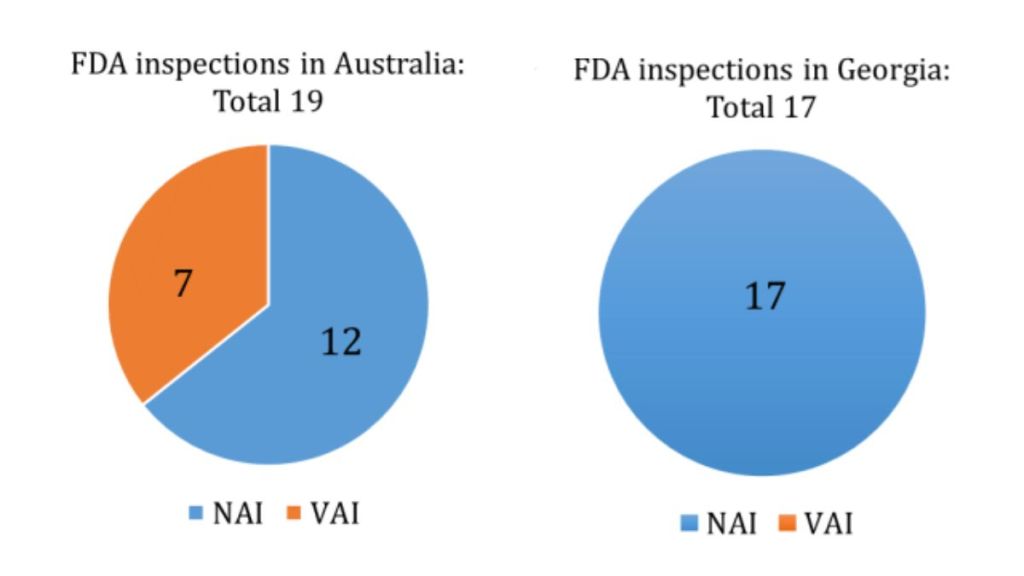
On the FDA inspection database and in the figure below, you will find that Georgia has had 17 Bioresearch Monitoring FDA inspections, with 100% NAI (No Action Indicated) reports. To our knowledge, Georgia is the only country in the world to have achieved 100% NAI outcomes in FDA inspections. In comparison, 19 Bioresearch Monitoring FDA inspections have been carried out in Australia within the last decade, with 12 NAI reports and 7 VAI (Voluntary Action Indicated) reports.

The results of the FDA inspections in Georgia are impressive and credible proof that the quality of clinical trials and GCP compliance are both high and worthy of recognition. Evidence exhibits that Georgia is the new rising star location to watch for international clinical trials.

Figure 1:

In conclusion, there are multiple locations in the world competing for clinical trial business and being the top choice for early stage clinical studies. Australia is one of these competitors. More and more countries are now joining the rivalry, including Central and Eastern European countries such as the Republic of Georgia. The positive outcome of this is that there is now greater choice for biotech and medtech companies for clinical trial conduct. This leads to better and faster clinical trials and helps the growth of the entire lifescience sector.

Sources:

https://www.fda.gov/inspections-compliance-enforcement-and-criminal-investigations/inspection-references/inspection-classification-database