Category: Clinical Research Trends

On February 21, 2019 the new US FDA rule on medical device clinical investigations conducted outside the United States (OUS) became effective. In this post, we would like to discuss the difference between the old and the new regulation and what is now required of sponsors by the FDA.

The new rule was triggered by the increasingly global nature of clinical research. Today, many clinical investigations of medical devices are conducted in locations OUS and the data produced is submitted to the FDA to support an IDE (Investigational Device Exemption), device marketing application or submission.  The FDA wishes to accept such data from well-designed and well-conducted clinical investigations performed OUS but wants to make sure that they were conducted in a manner similar to studies conducted in the US under FDA guidance. The agency wants the studies to be conducted in accordance with GCP, for the supporting information provided to be applicable, and for the FDA to be able to validate the data from the investigation through an onsite inspection if necessary. Under this new rule, the FDA’s intention is to achieve more uniformity since it wants to accept quality data from both clinical investigations conducted within and outside the United States equally, for whatever the application or submission type.

The new FDA rule applies to all regulatory pathways applicable to medical devices, including an investigational device exemption (IDE) application, a premarket notification (510(k)) submission, a request for De Novo classification, a premarket approval (PMA) application, a product development protocol (PDP) application, or a humanitarian device exemption (HDE). By having the requirements for acceptance of data from clinical investigations conducted outside the United States the same for all device marketing applications and submissions, greater assurance of the quality and integrity of the data from investigations OUS can be achieved.

The previous version of the regulations stated that investigators located OUS were expected to conduct clinical studies of medical devices in accordance with the “Declaration of Helsinki” or the laws and regulations of the country in which the research was conducted, whichever accorded greater protection to the human subjects.

With the new rule, entitled “Human Subject Protection; Acceptance of Data From Clinical Investigations for Medical Devices,” the Agency amended its regulations on the acceptance of clinical data arising from clinical studies of medical devices conducted both inside and OUS with the purpose of ensuring quality and integrity of the data obtained from these investigations and the protection of human subjects.

For investigations conducted in the US, the rule requires applicants and sponsors to state whether the investigation complied with 21 CFR, parts 50, 56, and 812. These regulations address data quality, integrity and human subject protection and are considered part of the FDA’s GCP regulations.

For clinical investigations conducted OUS, the US FDA requires that these investigations are conducted in accordance with good clinical practice (GCP). Supporting information must be submitted to the agency which proves the conformance with GCP and the data should be available for possible FDA inspections.

Compliance with GCP

Compliance with GCP should be demonstrated by obtaining and documenting the review and approval of the clinical investigation by an independent ethics committee (IEC) and obtaining and documenting freely given informed consent of subjects. This includes individuals whose specimens are used in investigations of medical devices. The new FDA rule imposes obligations on sponsors of medical device studies to make statements and provide information describing in detail how their investigations comply with GCP.

Further requirements vary however depending on whether the investigation is for a significant risk device or a nonsignificant risk device (classification must be done by the clinical study sponsor, but the FDA does not expect foreign IECs to necessarily make such differentiation).

For clinical investigations of significant risk medical devices, the FDA must be supplied with information on the incentives offered to participants. For clinical studies of nonsignificant risk devices, this information should be collected and provided to the FDA only on request. However, information on incentives should be included in the ICFs, reviewed and approved by IECs for both kinds of investigations.

Greater Flexibility

A certain degree of flexibility has been granted by the new FDA rule. In cases of non-complete GCP compliance, sponsors of clinical trials may submit a statement to the FDA justifying the reasons for non-compliance or requesting a waiver. This may be required, for example, when the investigation was conducted in a location where the applicable rules and regulations do not completely cover the provisions of GCP. The statement should explain the reason for not conducting the investigation in accordance with GCP and a description of the steps taken to ensure that the data and results are credible, accurate, and that the rights, safety, and well-being of subjects have been adequately protected.

Which GCP standard to follow?

The new rule states that clinical investigations OUS should be conducted in conformance with GCP. However, the FDA did not specify the GCP standard which should be followed. This is related to the fact that currently there is no one harmonized, international GCP standard for clinical studies of medical devices. ICH E6 – mostly applicable to clinical studies of pharmaceutical products – and ISO 14155:2011 are the two best known international GCP guidelines.

As a result, the FDA has allowed some flexibility when choosing the GCP standard. However, it has officially recognized the ISO standard for medical device investigations as the acceptable standard for clinical studies conducted OUS, and therefore OUS studies conducted in compliance with ISO are deemed to be in compliance with GCP. The FDA stated that sponsors and applicants who follow ISO 14155:2011 in the conduct of clinical investigations will be able to meet the requirement in § 812.28(a)(1) of the new rule as well as the local laws and regulations of the countries where the investigations are conducted.

The application of GCP standards in the conduct of clinical investigations OUS is in addition to the local laws and regulations, to the extent that the local laws and regulations do not incorporate such a standard.

Supporting information

The information which should be submitted to the FDA by sponsors of clinical investigations conducted OUS should include:

The names of all the investigators, and the names and addresses of all facilities that took part in the investigation, such as the investigational sites, laboratories, and specimen collection sites and where records relating to the investigation are maintained.

Information confirming investigator qualifications (typically in the form of CV or other similar document) confirming that the investigator is qualified to serve as an investigator based on his or her training and experience specifically related to the clinical investigation

Description of the research facilities including sufficient information for the FDA to make a judgement about the adequacy of the facilities to execute the investigation and meet its requirements (e.g., whether the site is appropriately staffed and equipped to conduct the investigation and is able to provide the appropriate emergent or specialized care, if required).

A detailed summary of the protocol and results of the investigation

Availability of data for inspections

One condition of the acceptance of data from investigations conducted OUS is that the FDA should be able to validate the data from such investigations through an onsite inspection, or through other appropriate means, if the agency deems it necessary.

Retention of records

Finally, the new rule specifies the period of retention of study records.

It requests that the sponsor must retain the required records of clinical investigations conducted OUS for at least 2 years after an Agency decision on that application or submission or, if the investigation is submitted in support of an IDE, for 2 years after termination or completion of the IDE. In summary, the FDA recognizes the international nature of clinical research and wishes to accept data obtained in clinical investigations OUS in support of an IDE application, a 510(k) submission, a PMA application, a PDP application, or an HDE application. However, in its new rule, the FDA has updated the criteria for acceptance of data from clinical investigations to help ensure the quality and integrity of data obtained from those studies and the protection of human subjects. The new rule makes it clear that the clinical investigations should be conducted in conformance with a GCP standard such as ICH E6 or ISO 14155:2011 and will require the sponsors to make statements and submit the supporting information demonstrating conformity.


International biotech and medtech companies are constantly searching for optimal locations for their early stage and proof-of-concept clinical trials. An example of a location that has become increasingly popular is Australia. This is in large part due to the great promotional effort of the government and Australian CROs.

The well known advantages of Australia for clinical trials include a streamlined regulatory process under the Clinical Trial Notification (CTN) scheme under which only ethics approval is necessary and a simple notification to the regulatory authority. Another advantage are the tax credits offered by the Australian government which reduces costs but requires incorporation of a corporate entity in Australia.

Clearly Australia makes a strong case; however other potential locations should not be overlooked. For example, Central and Eastern Europe (CEE) boasts many of the advantages for clinical trial conduct that can be found in Australia and also offers its own unique characteristics which are very well suited. As a result, CEE has increasingly become a popular hotspot for clinical trial conduct over the last couple of decades.

Advantages of CEE

CEE is densely populated with its encapsulated countries ranging in population. On one end of the spectrum there is Estonia with 1.3 million people and 2 million people in Latvia. On the other end of the spectrum there is Ukraine with 42 million and 38.4 million in Poland. Depending on which countries are included into the calculation or not (Russia in particular, would make a major difference with is population of over 140M people) the total population of the region is in the range of 100-300 millions of habitants.

Large and available patient populations has always been a strong point for the CEE region attracting big and small sponsors of clinical trials looking for easier access to patients.

Coupled with centralized healthcare in many CEE countries, patients tend to be pooled together in higher numbers at larger and specialist hospitals which allows for a more efficient patient enrolment process with a smaller number of sites needed to reach the recruitment targets. The average reported recruitment rate in CEE is 10.3 patients per site compared to 7.5 site in Western Europe.

For various reasons, including some economic disadvantages (although these are diminishing), both the physicians and patients in the CEE region tend to be motivated and enthusiastic about their participation in clinical trials, creating a win-win situation for the sponsors of clinical trials. Good patient retention and low drop-out rates is another important advantage.

Fast rates of patient enrolment is one of the crucial advantages when considering the fact that the no. 1 cause of delays in clinical trials is inefficient patient enrolment. According to a TUFTS analysis, 48% of investigative sites either under-enrol or fail to enrol subjects. For Phase II and Phase III trials within the Western environment, 11% of sites fail to enrol even a single patient in a clinical trial. This leads to prolonged study timelines and significant financial and human resource losses.

Centralized systems of healthcare in CEE with large hospitals and effective patient referral pathways; motivated investigators with considerable experience in conducting clinical trials; patients usually enthusiastic about clinical trials and available in large numbers – all these factors form a good basis for effective patient recruitment. When these advantages are coupled with modest costs of clinical trials, CEE becomes a very strong competitor in the global clinical trial market.

Typically, all CEE countries share the advantages discussed but, in this article, we would like to focus on one particular location that is fast becoming a very popular choice for international clinical trials – the Republic of Georgia.

Spotlight on Georgia

Georgia is located in the Caucasus region, at the cross-roads between Europe and Asia. It’s a country of 69,700km squared and with a population of nearly 4 million people. It is also only 2 hours ahead of the Central European Time-Zone. In comparison, Australia is 8 hours ahead.

Let us review the clinical trial environment in Georgia. Like in Australia, the clinical trial approval process is very streamlined. Ethics approvals are granted by independent local ethics committees with typical approval timelines not exceeding 2 weeks. Approval by the special committee on clinical trials within the Ministry of Health which is needed for clinical studies of pharmaceutical products is granted within 21 days. This makes Georgia the fastest location for clinical trial start-up timelines in Europe.

In addition, no import license is required in Georgia for the importation of investigational products. This means faster and easier study start-up; and the whole logistics process is very simple and cost-effective with no duties to pay on the imported clinical trial materials.

The cost of clinical trials is always an important consideration, particularly for smaller and mid-size sponsors. Although no tax credits are available in Georgia, the cost of clinical trials is modest and, in our estimates, the overall costs end up being significantly lower than in Australia.

The standard of the healthcare system is also of course a crucial factor. Visitors to Georgia are often very surprised by the high standard of the healthcare system. The majority of (the nearly 300) hospitals are very modern and have state of the art equipment. Many physicians received training in Western Europe and the United States and speak very good English. There are also many national key opinion leaders available who are extensively published and have participated in many international clinical trials. The two therapeutic areas that are the most popular and most advanced in Georgia for clinical trials are oncology and cardiology.

ICH GCP compliance was introduced in Georgia in 2008 and is fully integrated into national legislation. In general, it is a misconceived concern that CEE countries do not conform to the standards of data quality and GCP demonstrated in Western Europe, Northern America and Australia. Our own experience would prove the contrary, but FDA inspections– an excellent objective measure of the quality of clinical study data – prove this claim too.

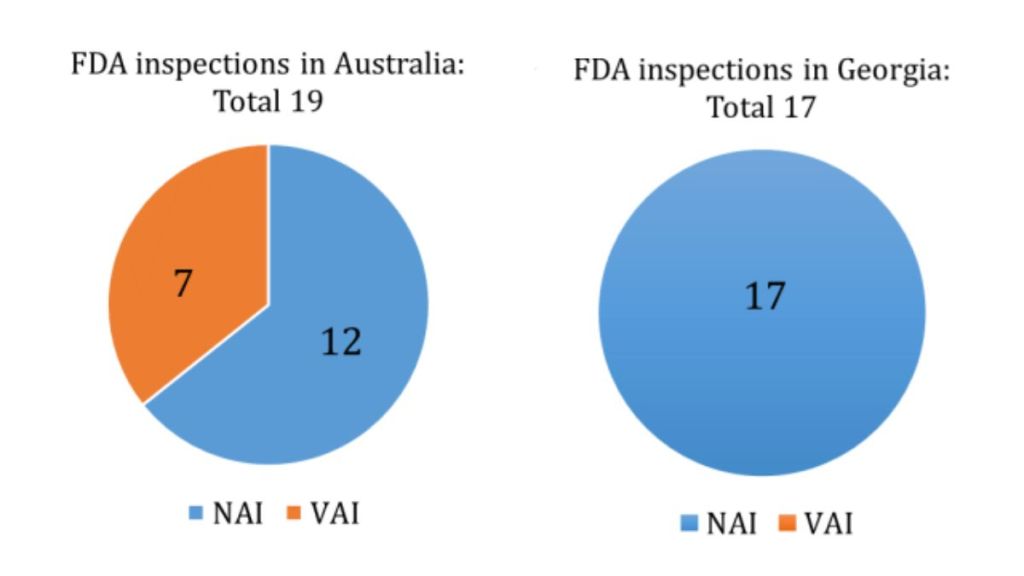
On the FDA inspection database and in the figure below, you will find that Georgia has had 17 Bioresearch Monitoring FDA inspections, with 100% NAI (No Action Indicated) reports. To our knowledge, Georgia is the only country in the world to have achieved 100% NAI outcomes in FDA inspections. In comparison, 19 Bioresearch Monitoring FDA inspections have been carried out in Australia within the last decade, with 12 NAI reports and 7 VAI (Voluntary Action Indicated) reports.

The results of the FDA inspections in Georgia are impressive and credible proof that the quality of clinical trials and GCP compliance are both high and worthy of recognition. Evidence exhibits that Georgia is the new rising star location to watch for international clinical trials.

Figure 1:

In conclusion, there are multiple locations in the world competing for clinical trial business and being the top choice for early stage clinical studies. Australia is one of these competitors. More and more countries are now joining the rivalry, including Central and Eastern European countries such as the Republic of Georgia. The positive outcome of this is that there is now greater choice for biotech and medtech companies for clinical trial conduct. This leads to better and faster clinical trials and helps the growth of the entire lifescience sector.

Sources:

https://www.fda.gov/inspections-compliance-enforcement-and-criminal-investigations/inspection-references/inspection-classification-database

It is widely known and understood that the no. 1 cause of delays in clinical trials is inefficient patient enrolment. The problem has become widespread and does not show any signs of abating. According to a TUFTS analysis, 48% of investigative sites either under-enroll or fail to enroll subjects. This leads to prolongation of study timelines, delayed marketing authorizations for important drugs and very significant financial losses for pharmaceutical and biopharmaceutical companies.

To rectify the patient enrollment gap, much time and effort is spent on advertisement for participation in clinical trials. The use of traditional and social media in direct-to-patient advertising of clinical trials is well established and popular in areas such as the United States, but the problems regarding delays in enrollment are not ceasing. This clearly indicates that new strategies should be sought out and implemented.

Many sponsors and CROs have tried to increase patient enrolment rates by engaging external physicians. EC/IRB-approved principal investigator (PI) letters to colleagues and other physicians is a well-known example of such attempts. However, in reality, PIs typically lack both time and motivation to fully engage in building and managing a referral network. Even when external physicians respond to a PI’s letter and try to refer patients, without proper organization and support, many of these patients simply never reach the investigative sites.

Some useful data illustrating the current state of engagement of referring healthcare professionals comes from a 2017 Tufts CSDD survey of 2,000 nurses and physicians. It was revealed that 70% and 90% of them are comfortable with discussing clinical trials with their patients but less than 0.2% actually do so. The main reasons for this, according to the Tufts impact report, are that: Physicians and nurses have limited information about the relevant clinical trials, they do not have enough time, and poor communication and co-ordination between the parties involved in the referral process makes it inefficient.

This firmly suggests that supportive strategies should be developed, which will create a system of support for external physicians’ referrals and improve communication between referring physicians, sponsors and CROs, and study investigators.

A new, innovative strategy which targets these problems, is ePatientFinder’s Clinical Trial Exchange™ platform. On the platform, patients’ electronic health records (EHR) and information regarding ongoing trials (filtered by geography and specialty) are matched and brought to the attention of physicians who have suitable patient resources. The patients identified through the system, are invited by physicians for a discussion and personal pre-evaluation which makes sure that the patients who are eventually referred are highly qualified and willing to participate in clinical studies.

We here at Clinical Accelerator and ClinAccel.Net have always valued the role of external physicians in effective patient enrolment campaigns. Having worked in the patient enrolment support field for many years, we have developed an enhanced patient enrolment model involving a large, ever-growing network of referring physicians working in all major therapeutic areas and our PEMs (patient enrolment managers) who identify relevant external physicians, help them with patient identification and manage the whole referral process. They ensure streamlined and effective communication between the referring physicians and study investigators and take care of simple but important tasks such as patients’ transportation to clinical sites and remuneration for their spent time.

Rather than focusing on direct-to-patient advertising campaigns, our focus is on patient information campaigns delivered by our partner physicians who care medically for the patients we seek for enrolment into clinical trials. Our PEMs assist doctors in designing and delivering these patient-oriented campaigns and providing them with IRB-approved supporting materials which are typically used within healthcare institution environments.

The end result of taking full advantage of referring physicians’ untapped potential, is that qualified patients are identified, screened and referred in high numbers and at speed, leading to faster patient recruitment, more compact study timelines and reduced trial costs.

Anna Nikitina.

References: Poor physician and nurse engagement driving low patient recruitment. Tufts Center for the Study of Drug Development Impact Report.  Jan/Feb, 2017, Vol. 19 No. 1.

Over 6,800 rare diseases such as Haemophilia, Tay Sach’s disease and Gaucher disease are affecting more than 25 million Americans. Still yet, there is limited understanding or knowledge of these debilitating, life threatening and progressive diseases. The Orphan Drug Act defines rare diseases as disorders affecting less than 200,000 people in the United States. Such a small patient population is the exact cause of problems and challenges in patient enrolment.

One requirement for the study of human diseases is an appropriate trial design. Randomization and control are considered essential if efficacy is to be attained and bias to be reduced, but for this a large sample must be acquired. However, due to scattered patient populations, variations among disease sub types and simply by necessity, clinical trials in rare diseases enrol small samples and still yet with difficulty.

This is partly due to the fact that the majority of rare diseases affect children and reduce lifespan. This leads to families being less likely to enrol their child into a study in which they may receive a placebo. Ethical issues may arise too as children are considered a ‘vulnerable’ population. In addition, problems occur if several studies are being carried out simultaneously as enrolment of a patient in one study may cause illegibility in another. As a result of enrolment challenges, it’s calculated that approximately 30% of phase III trials in rare diseases fail.

Clearly, rare diseases require an approach that is tailored to the study goal and specific indications. Two solution that are arguably vital are: in-home Clinical Trial Support and Patient Registries.

In-home Clinical Trial Support

Traditionally, patients are faced with the inconveniency of traveling to sites numerous times during the study. This puts strain on the patients’ budget and induces drop-outs. In-home Clinical Trial Support however takes into account the patients preferences and difficulties. The nurses travel to the patients’ home instead to carry out the clinical tests, PK sampling, drug infusion administration etc. This saves the patients major costs in regards to accommodation and reduces the number of visits to the sites making the concept of enrolment more appealing.

Patient Registries

With rare diseases it is often the case that sufficient data or information is unavailable. Patient registries help improve understanding and expand the knowledge base for companies developing treatments. Patient registries are global online data-repositories encompassing patients’ treatment-related health information which are created by several nations such as the U.S and Europe. They allow the development of communities which are able to share information regarding clinical trials which in turn increases the rate of patient recruitment, reduces enrolment delays, and allows better site planning as wider knowledge on the subject is made available.

The current status in regards to rare diseases is that we have a significant knowledge gap. In order to reduce this, continued collective efforts must be made to improve the clinical trial protocol design which will ultimately reduce time delays, hasten patient recruitment and most importantly, benefit those suffering from rare diseases.

References:

Augustine, Erika F., Heather R. Adams, and Jonathan W. Mink. “Clinical Trials in Rare Disease: Challenges and Opportunities.” Journal of child neurology28.9 (2013): 1142–1150. PMC. Web. 9 June 2017.

Khaleel, Samiya. “Rare Disease Patient Recruitment And Retention.” Clinical Leader. N.p., n.d. Web. 8 June 2017.

Leavy, Michelle, and Richard Gliklich. “Patient Registries and Rare Diseases.” Applied Clinical Trials. N.p., 2011. Web. 8 June 2017.

Stevenson, Danielle. “Clinical Trials for Rare Diseases – Finding and Keeping Patients.” BHD Foundation. N.p., n.d. Web. 8 June 2017.

Tirunagari, Sreedhar. “Rare Disease Clinical Trials‘Patient Recruitment Challenges.’” Global Health Trials. N.p., n.d. Web. 8 June 2017.

Anna Nikitina

What are the implications and consequences of the Brexit vote for the pharmaceutical and MedTech industries so close to the heart of most reading this piece? Many in these industries and in academic research establishments argued that a Brexit vote would be damaging for research and patient access and change the way drugs and medicines are tested and marketed; worryingly, two US companies intimated to the National Eczema Society that trials of new treatments would not take place in the UK in the event of Brexit.  Other campaigners, criticising ponderous bureaucratic nature the European Medicines Agency (EMA), have said that drugs could be made available more quickly if the UK votes to leave.

Whilst every EU member state has its own medical regulatory body (’Competent Authority’ – this being the MHRA in the UK) able to license new drugs, the European Medicines Agency (EMA) is currently a centralised body staffed and run by regulators from all EU member states providing marketing authorisation that is valid throughout all member states and countries in the European Economic Area (EEA i.e. EU plus Iceland, Liechtenstein and Norway).  Now, the EMA happens to be based in London, so the question is what happens given that the country with the EMA HQ is no longer to be a member?  It seems more than likely that the EMA will have to move its HQ out of London to an EU country. Apart from this obvious major upheaval, some in the pharmaceutical world argue that this will in itself reduce the importance of the UK in the eyes of the global drug companies.

If the UK decides to negotiate to stay in the EEA (a likely scenario?) there should not, in practice, be much difference to regulation. But if the UK stays out of the EEA, drug companies would need to go through a separate process with British regulators for new products without the benefit of a centralised European route.  However, UK drug and device companies will certainly want to market their products internationally, whatever happens to the infrastructure of the regulatory bodies and their internal procedures.  Thus it seems most logical that trials in the ‘independent’ UK must continue to run along the same guidelines as the rest of Europe. All procedures must still remain entirely compatible so that the EU could agree authorisation for marketing UK drugs and devices – one can argue that accepting this premise should mean no major changes in procedures and counter some expectations that not being an official part of EU-harmonisation might jeopardise the currently high degree of involvement in rare disease trials (the UK conducts around 40% such trials) as well as appeasing non-UK companies reluctant  to perform trials in the UK following Brexit.

There is also a move for even closer harmonisation within remaining EU states over the next few years to allow a single EU-central entry point for companies to apply for clinical trial authorisations (CTAs). Currently, of course each country still ‘competes’ to obtain their own CTA from Competent Authorities to local procedures.  Without care, this could distance the UK from EU regulations and trials conducted therein.

The Leave campaign argued that the existing EU Clinical Trials Directive has damaged medical research and innovation in the UK. For example, the UK Commons Science and Technology Committee said in a recent report: “Weaknesses in the 2001 Clinical Trials Directive significantly increased the administrative burden and cost of running academic clinical trials and saw a reduction in trials taking place in Europe.”  It did then acknowledge that the new regulations due to take effect in 2018 appeared to be an improvement [2].

There are legal aspects to consider: EU Directives governing medicinal products require the UK to implement relevant legislation into national law (done by reference to the European Communities Act of 1972 and through the implementation of the Human Medicines Regulation of 2012). The UK’s departure from the EU would mean these laws remain in place unless the UK government decided to change them.  Also, if the UK adopts national legislation that is significantly different to the new EU Regulation, this is likely to make the environment difficult for companies wanting to undertake trials in a number of countries that includes the UK.

Few would disagree that the result of the referendum vote is important for drug and MedTech companies and their products.  What of the reactions from some regulatory and official bodies?  Do these cast any light on future developments?  The MHRA, in their response, have said that they would work closely with the government to ‘consider the implications for the work of the Agency’ and to ‘continue to make a major contribution globally to improving public health through the effective regulation of medicines and medical devices, underpinned by science and research’ [3].   The statement from the Association of the British Pharmaceutical Industry (APBI) says that they ‘are committed to working closely with the government to agree what steps need to be taken to send a strong signal that the UK is open for business [4].

The European Federation of Pharmaceutical Industries & Associations (EFPIA) has said that it ‘shares the common goal of ensuring rapid access to innovative medicines for patients across Europe, as well developing a regulatory and policy environment that fosters innovation and supports the research and development of new medicines to meet the needs of patients, healthcare systems and society.  As an industry, over the coming months, we are committed to engaging with stakeholders both in Europe and in the UK to support these objectives’ [5].

Clearly nothing is clear among ‘the powers that be’ about the effects of all this and what will happen at this stage! There is still much conjecture, and given that the EFPIA has also rightly said that ‘The process of the UK leaving the European Union is likely to be long and complex. The pharmaceutical industry stands ready to work closely with governments and EU institutions to minimise its impact on patients and secure the future of medical innovation across Europe’, there is much to discuss and plans are yet to be put in place.  Trials will go on in Europe and, of course, in other territories not embroiled in the EU and its regulations. As for EU developments, it really is a case, to put it in medical terms, of ‘watchful waiting’…….

Brian Cary

References

  1. https://next.ft.com/content/1ce1a720-ce94-3c32-a689-8d2356388a1f
  2. http://www.publications.parliament.uk/pa/cm201617/cmselect/cmsctech/158/15807.htm
  3. https://www.gov.uk/government/news/medicines-and-healthcare-products-regulatory-agency-statement-on-the-outcome-of-the-eu-referendum
  4. http://www.abpi.org.uk/media-centre/newsreleases/2016/Pages/UK-must-send-strong-signal-it-is-open-for-business.aspx
  5. http://www.efpia.eu

Well, the people of Britain have now spoken – albeit not that clearly given a 51.9%:48.1% split in the referendum voting figures. Nevertheless, it’s a democratic decision and now the word on almost everyone’s lips is “Brexit”. Despite a protest march and some other attempts to try and overturn the result or re-run the event (constitutionally problematic?), previously ‘pro-remain’ politicians in Britain now appear to be fully accepting the decision and will actively participate in what is set to be the long process of extricating the countries of the UK from central EU control.  Hopefully this ‘divorce’ will be an amicable one, retaining the good will and well established personal and trading relations with EU citizens and companies.

Looking at the statistics of the vote for a moment, which give an interesting insight into some demographics of the voting electorate, it appears that the leave result was swung somewhat by the over 60’s with younger people voting quite convincingly to remain – but being fewer in number the overall impact was dampened (perhaps apathy or indecision among the young led them not to vote?)   Age, aside, other demographics from the 382 separate voting areas indicated that ‘Leavers’ tended to be more prevalent in low income areas and (paradoxically?) from areas most economically dependent on the EU; whilst ‘Remainers’ tended more to be degree-educated, in jobs requiring a degree or have not travelled abroad recently (non-passport holders) but of course there was no clear-cut divide as these were statistical trends and I know many in the more elderly spectrum voting to remain [1].

All sorts of financial and social consequences of a vote to leave were mooted and, indeed, the expected dismay and turmoil on world financial markets followed the largely unexpected result immediately and although nerves (financial markets, at least, at the time of writing) seemed to have calmed somewhat, people in different industries and professions will be wondering what the future operating landscape for their businesses will look like.

In the second of these two pieces we shall consider some of the arguments for and against ‘Brexit’ for the Pharma and MedTech industries and whether there is any indication of what happens next.

Brian Cary

References

  1. https://next.ft.com/content/1ce1a720-ce94-3c32-a689-8d2356388a1f

According to Penn Medicine Researchers study’s, Twitter has the potential to promote patient recruitment into oncology clinical trials and increase the interest of patients [1].

Enrollment into clinical studies is crucial for the development of new treatment options for patients. It is also provides opportunities for those who are not responsive to the previous treatment or who cannot afford it. However, only about five percent of adult cancer patients participate in clinical studies, thus creating a problematic situation for the drug development environment.

According to statistics, approximately 15-20% of all trials never manage to enroll a single patient, 37% of all sites in a given trial fail to meet their enrolment targets. It is also worthy to keep in mind that nearly 30% of the time dedicated to clinical trials is spent on patient recruitment and enrolment [2]. To overcome this problem, companies are trying to reach their potential clinical trial participants via dedicated websites (Novartis), Facebook, Google, YouTube etc. [2].

Physicians from Abramson Cancer Center of the University of Pennsylvania analyzed a number of lung cancer tweets in the social media and found that a great number of posts were about clinical trials. Twitter users were particularly interested in immunotherapy. Surprisingly, only one tweet was used to help recruitment into a clinical study.

“Twitter provides a promising and novel avenue for exploring how cancer patients conceptualize and communicate about their health, and may have the potential to promote much-needed clinical trial recruitment.” said Mina S. Sedrak, MD, MS, a fellow member of the division of Hematology/Oncology at the Perelman School of Medicine at the University of Pennsylvania and first author of the study published online 3 March 2016 as a research letter titled “Cancer Communication in the Social Media Age” in JAMA Oncology.

Nowadays, there are numerous cancer care organizations and centers that use social media, including Twitter, for promotional and educational purposes. Penn Scientists tried to find out to what extent the information about clinical trails for cancer patients present on Twitter are useful.

In the pilot study, Sedrak and his coworkers analyzed a randomly chosen sample of 1,516 tweets out of a total of 15,346 that contained the phrase “lung cancer” from January 5 – 21, 2015, and assessed who read them.

More than half (56%) of the tweets were focused on psychological support and prevention topics. Nevertheless, clinical trials were the topic of almost 18% of analyzed tweets posted by patients, health professionals and other people, making these studies the second largest theme of social communication. Most of the clinical trial tweets (79%) were about immunotherapy studies, and 86% of them contained links directing readers to original websites and articles.

Authors were surprised to find that only one out of one and a half thousand analyzed tweets were linked to a patient enrollment website [1, 3]. According to them, although some more effort is needed to better assess social media involvement in cancer education, prevention and information, it is worthy to start using it as a tool for recruitment for the cancer clinical trials. On the other hand, social media patient enrollment will be the new challenge to institutional review boards with respect to non-coercive content and the assurance of patient’s privacy. New rules and policies may be needed in order to control the social media enrollment campaigns.

Sedrak sums up that “We need to learn more about the ecology of social media because it is clearly not consistently directing patients to the right places (…) social media may provide an infrastructure for cancer centers, researchers, and physicians to interact with the public in new and productive ways, including stimulating interest in new clinical trials with targeted messages that connect patients, caregivers, and families with trial enrollment websites. This potential remains largely untapped” [1].

References

  1. http://www.uphs.upenn.edu/news/News_Releases/2016/03/sedrak/ – assessed 23.06.2016
  2. http://pharmaphorum.com/views-and-analysis/using-social-media-for-clinical-trial-recruitment/ – assessed 23.06.2016
  3. http://www.symplur.com/blog/twitter-future-clinical-trial-recruitment/ – assessed 23.06.2016

Risk-based monitoring (RBM) is a method that uses risk algorithms to assess the right level of clinical trials monitoring. Food and Drug Administration (FDA) and European Medicines Agency (EMA) currently encourage this approach.

RBM focuses on improving quality of the data and helps to reduce the time consumed and costly on-site 100% source data verification. At times, 25-30% of the whole clinical study budget could be spent on the costs of monitoring (personnel, travel, expenses etc.). Implementing RBM can help to reduce these costs.

There are many other reasons for developing RBM. One of the main reasons is that it could help remove problems that are created through the traditional way of monitoring such as: lack of broadly understood principles; methodology and approach as well as terminology; scope of tasks; deliverables; roles and responsibilities while planning; conducting analysis; reporting and assessment of clinical trials. Additionally, it’s thought that important decisions concerning risks are not based on well-defined and objective criteria but are actually made on the basis of individual or teamwork assessments and opinions. Some observations indicate that there is limited emphasis put on the foundation of RBM with it’s usage restricted to the review of data and ignoring other respects of the study e.g. design of the protocol. It is linked to the fact that often no integrated quality management strategy is implemented. Such strategy should be the foundation of the design of the study, site selection, study management and general oversight aspects. Another problem is lack of sharing risk assessments within and between sponsors. RBM is a risk-based approach developed to manage all these problems.

The application of RBM in clinical trials is growing, especially for Phase II studies. Results of the global survey conducted by the Metrics Champion Consortium  (MCC) in 2013, reveal that all respondents were using some sort of RBM tools. Majority of stake holders (85%) continued traditional on-site monitoring involving 100% source data verification (SDV) activities, while more than a half reported using in the same time some type of RBM program on a pilot basis, or across a full program.

The most popular RBM programs involve on site monitoring with reduced SDV, or remote monitoring with support of the central data analytics (CDA). The methods of remote monitoring include the usage of data analytics reports, remote source data verification and patient profiling, which means monitoring individual study subject reports.

The reasons for adopting RBM varied among different stakeholders. Contract Research Organizations (CROs) and academic research institutes chose to implement RBM to reduce monitoring costs, whereas pharmaceutical and biotech companies chose it to improve quality oversight.

Implementing RBM also has many other advantages. Effective risk management requires a structured approach for risk identification, analysis and control. The system of risk management should be repeatable, reproducible, sustainable and adaptable in meeting regulatory demands and achieving quality outcomes. It outlines a systematic approach for the assessment, communication, control and review of risks related to the respect of quality. Implementing RBM can also help to facilitate many other aspects of the clinical trial, like site selection, qualification, protocol design and subject enrollment.

It seems like implementing RBM strategies would only be possible for big companies and institutions, but the truth is that designing and implementing RBM does not depend on the size of a company. All of interested stakeholders face similar problems e.g. lack of resources, time pressure and growing regulatory requirements and can benefit from developing an effective risk-based approach.

Another myth about RBM is the conviction that it’s implementation can be successful only with the aid of highly sophisticated IT systems. Sometimes, the simplest spreadsheets would be sufficient, but with the growth of study complexity, scope, number of arms and comparators more complex tools that minimize the workload may be needed.  All in all, IT software is not an essential element of the RBM strategy. The basis should be the overall philosophy inclusive identification of risks, analysis of their impact, likelihood and detectability. For such assessments no specific IT systems are necessary.

There is also an opinion that implementing RBM may influence the way of writing protocols and setting up trials. Of course some changes may be needed to improve the overall quality of the study. Indicated fields of improvement are: reaching planned recruitment targets, ending the study on time and on planned budget, launching proper number of amendments, delays and additional costs due to compliance flaws.

The organization, which is interested in developing the Risk-Based Monitoring programs rose as RBM Consortium. It associates quality risk management industry experts, risk-based technology firms, data analysts and biopharmaceutical business strategists. RBM Consortium is a transnational alliance to improve awareness of RBM in clinical trials and give advice to interested stakeholders on the area of quality risk management and methodologies in RBM.

Due to its many advantages and overall interest in ensuring best quality data, RBM seems to be gaining more and more followers and may become the gold standard of risk-monitoring activities in the area of clinical trials.

Source:

Risk-Based Monitoring in Clinical Trials, Applied Clinical Trials, May 2015

In Part 1 we looked at the guidelines [1] for the requirement in India to make AV-recordings of the investigator(s) and patients (and any necessary witnesses/representatives) during the consent process and potential implications [2]. So how, in practice, has this new requirement affected the conduct of clinical trials in India and are there implications for the regulatory environment in other parts of the world?

It seems that results and reactions have been somewhat mixed.   Having to record the procedure on camera will surely have encouraged those investigators agreeing participation in a trial to consent patients fully and properly. There must be little doubt that where there is successful videorecording to the required procedures this is achieving the desired aim of ensuring a clear, transparent and honest record of the process to regulatory ethical standards. But this has come at a cost – the challenges referred to earlier did result in a reduction in numbers of trials and recruitment rate.

For instance, The India Times reported in January 2014 that videorecording was driving away subjects, citing one reason as unwillingness of patients to discuss their condition, especially terminal or embarrassing illness, on camera.  At a Supreme Court hearing statistics presented indicated withdrawal or early termination of 25% (40/157) of cases of Global trials [3].

In April last year the India’s Economic Times again reported that volunteers were being put off clinical trials. Investigators were reporting, for example, that telling burqa clad women to unveil for videographing consent for trials (guidelines insist, understandably, that all participants are identifiable facially) was proving to be some task. The challenge was extreme in a place where people follow strict social and religious prescriptions, it was said. This reflects earlier reservations mentioned that culture and preferences of patients as well as discomfort could affect recruitment.  Suspicion by naive patients of what the recording might also be used for was also mentioned – even the fear that the video might be sold to the media for nefarious purposes was said to put patients off as well as make the investigator feel somewhat awkward! [4]

Lack of infrastructure at the sites (major government hospitals as well as smaller institutions) was, as anticipated, also cited as a reason for reduced involvement in trials, but this is something that institutions and sponsors can remedy to some extent over time.  Some sites have declined to participate in trials since the mandate was introduced for other reasons – this is not necessarily a reflection of the sites ability to undertake the work ethically but the fear of being a scapegoat as part of a possible future witch hunt, it is believed [5].

Other sources, from the sponsors’ monitoring perspective, report that the introduction of videoconsenting has been a good success – at least that is where the capability and willingness to run trials with the mandated process exists.  The impact on recruitment rate was said to have fallen by only around 10% at participating sites (presumably for reasons mentioned above of patient discomfort or wariness) but monitoring the process was not considered problematic [5].

It has to be said that despite recent tightening of affairs, particularly in the improvement of proper consent, there are, apparently, still some shortcomings being found at audit in the quality of trials. For instance the World Health Organization has reported quite recently that for one Indian CRO “Critical” lapses were found in a trial of HIV drugs, including the fact that two-thirds of patients’ ECGs turned out to be identical duplicates with changes in names, dates etc. to make them appear as if they were from different subjects; the standard of record-keeping was also criticised resulting in a ‘notice of concern’ issued by the WHO inspectors in June this year [6].

Nevertheless it is encouraging from the pharmaceutical industry perspective to see the Indian regulatory agencies taking measures to try and ensure quality of trials in their country.  Indeed, the Economic Times of India recently reported (August 12th this year) that India’s Cabinet Committee on Economic Affairs had just approved a proposal for strengthening and upgrading the drug regulatory system at Central and state level at a total cost of Rs 1750 ($270 million) [7]. This has to be done, of course, to protect a potentially great source of income from the conduct of trials.

What of the implications for other world territories involved in trials?  Are we to see this somewhat burdensome requirement of videorecording consent being rolled out elsewhere?  There’s obviously a natural opposition for this in many quarters – especially where strict audits or ‘whistleblowing’ have not revealed malpractice – but for some it will be seen as a further safeguard for patients.

The FDA already publish guidelines on the use of electronic systems and processes that may employ multiple electronic media (e.g., text, graphics, audio, video, podcasts and interactive Websites, biological recognition devices, and card readers) to convey information related to the study and to obtain and document informed consent [8]. Although the use of electronic processes to obtain informed consent (e.g. an interactive interface) is not quite the same thing as documenting the process by filming, it is a relatively short step away from having a video record of the IC process as proof that it was performed appropriately with and by the investigator and participants specified on a written document.

However, perhaps most tellingly, the FDA already recommends video records as a valid way of vouchsafing the process of consent in case of illiterate participants who can understand and comprehend spoken English but are physically unable to talk or write [9].

We shall just have to ‘watch this space’ to see how this matter develops. In the meantime, in most areas of the world, we shall be allowed to conduct the consent process – naturally, in diligent and professional fashion – away from the glare and any perceived intrusion of the cameras.

  1. http://www.cdsco.nic.in/writereaddata/Guidance_for_AV Recording_09.January.14.pdf
  2. http://www.cdsco.nic.in/writereaddata/Office Order dated 19.11.2013.pdf
  3. http://timesofindia.indiatimes.com/india/Video-recording-of-consent-for-clinical-trials-driving-away-subjects-SC-told/articleshow/29626348.cms
  4. http://articles.economictimes.indiatimes.com/2014-04-22/news/49318820_1_trials-cervical-cancer-consent-process
  5. Personal Communications via ‘Freelance Clinical Researchers’ Yahoo Group
  6. http://apps.who.int/prequal/info_applicants/NOC/NoticeConcern-Quest_July2015.pdf
  7. http://articles.economictimes.indiatimes.com/2015-08-12/news/65490088_1_ccea-drug-regulatory-system-proposal
  8. http://www.fda.gov/downloads/Drugs/GuidanceComplianceRegulatoryInformation/Guidances/UCM436811.pdf
  9. http://www.fda.gov/RegulatoryInformation/Guidances/ucm126431.htm

Lights, camera, action!  Starring Investigator and trial participants….

Back in November 2013, following a number of scandals in India involving revelations that vulnerable patients were being recruited into unethical clinical trials without proper informed consent, a supreme court order demanded that mechanisms be put in place to address these worrying ethical issues. This resulted in the CDSCO (Central Drugs Standard Control Organization) issuing a direction requiring an interesting and some would say challenging, new procedure in the recruitment and consent process.

The direction from the Drugs Controller India [1], which is aimed at all sponsors, investigators, institutes/organizations and other stakeholders involved in clinical trials went (in part) as follows: “In all clinical trials, in addition to obtaining written informed consent, audio-visual recording of the informed consent process of each trial subject, including the procedure of providing information to the subject & his/her understanding on such consent is required to be done while adhering to the principles of confidentiality”. This was to apply to all local and global clinical trials.

This move was understandably greeted with some consternation and scepticism about the practicality of this potentially burdensome additional requirement.  However, as the immediate consequence of the Supreme Court’s reaction to the scandals was that the number of new clinical trials dropped dramatically (data from the Indian Government show that the number of trial applications/approved studies fell from 480/253 in 2012 to 207/73 in 2013) strong regulatory intervention was necessary to try and restore some confidence in the ethics and integrity of Indian clinical trials as far as sponsors and regulatory agencies, non-governmental organizations and the public were concerned.

Some initial guidance on the requirements was provided for clarification and, indeed, to achieve a degree of standardization to deliver quality suitable for audit.

The strict guidance outlined key aspects of required procedures: Basic requirements for the AV recording (equipment, surroundings etc); documentation and approval requirements; the process of A-V recording consent (with initial consent being required for the recording as well as covering, and ensuring understanding of, all the required points – including foreseeable risks or discomforts that might have been missing from poorly obtained consent with overstated benefits); points to consider (such as testing the equipment, reaffirming consent to recording, clear facial identification of participants, ensuring no interruptions etc.); storage of recordings (pen drive, CD/DVD, security, archiving etc.).  Guidance also states that it is the Investigator’s responsibility to adhere to the principles of confidentiality; AV recording should be treated as written medical records in terms of confidentiality, removal from the site and access by patients as mentioned in ICMR (Indian Council of Medical Research) & Indian GCP.  With digital recording, safeguards regarding electronic transmission are as important as the safeguarding of the physical location of the recording, they point out.   Other guidance topics include access to A-V records (e.g. controlling this and maintaining confidentiality); video re-consenting as necessary during the trial; requirements for special populations (video recording of the usual consent from independent witnesses or legally acceptable representatives).  Roles & Responsibilities are covered – with the PI also having overall responsibility for identifying and training the site staff and AV recording of consent process etc. [2]

If fully and successfully applied, adopting these procedures should clearly improve the reliability, transparency and quality of conducting the informed consent process to internationally recognized standards and be welcomed at an ethical level but at the same time its introduction will surely have placed extra challenges on sponsors and investigators to apply them as required.  These challenges, at best, put pressure on potential recruitment numbers at sites and at worst prevent some potential investigators taking part in trials at all.

Firstly, there is the infrastructure at study sites to consider in making AV recording at the sites possible – suitable rooms for the recordings in a quiet environment and the equipment itself – and this will incur some additional consent costs to the budget, especially as the recordings (and storage/archiving) applies to all patients being consented, including screen failures.  A little extra time is also need to set up and conduct each process.

There is also the question of culture and preferences of potential participants, which may prevent proper recording according to necessary guidelines; feelings of intrusion or any discomfort at being ‘on camera’ may simply result in refusal to participate – with an obvious negative impact upon recruitment. One also has to remember that consent is a ‘process’ not a simple ‘event’ and recording this can produce more work at the site.  A potential language barrier may also exist, particularly for external monitors, meaning a careful more restrictive choice of personnel for this task is necessary.

Note that for consent of ‘special populations’ of patients (e.g. illiterate patients, those not able to consent for themselves) any necessary witnesses, representatives or guardians are also involved as participants in the recordings and so their willingness (and consent) to the process must also be established.

Any ‘re-consenting’ required after amendments also creates extra work and potential dilemma – for example, what to do if a participant refuses further video recording yet  wishes to continue in the trial?

Further, there is an extra, but obviously important, dimension to video consent – that of interpretation of ‘body language’, both of the patient/representatives and of the investigator / study staff.  Although assessing degree of willingness on behalf of the patient or possible coercion on behalf of the investigator is the principal benefit not apparent with a simple signature, it puts the extra onus on monitors and auditors to understand and interpret the scenario and, in some cases, perhaps even feeling confident to question the purported freely given nature of the consent.  Training of these personnel in this and other aspects of video-consent is also an important consideration requiring extra time and expertise.

Extra care would be necessary to protect the confidentiality and integrity of the additional personal information and identity of patients on behalf of the investigator (camera, pen drives, SD cards etc.) and particularly the sponsor’s personnel who have access to, and review, the videos.  Tampering with the video record – inappropriate editing down, for instance – is something sponsors and regulators should also be on their guard about, although one trusts that this would be a rare occurrence.

In part two on this topic we shall consider how this requirement has been received and how, in practice, it may have affected the conduct of clinical trials in India.

  1. http://www.cdsco.nic.in/writereaddata/Office Order dated 19.11.2013.pdf
  2. http://www.cdsco.nic.in/writereaddata/Guidance_for_AV Recording_09.January.14.pdf